What does Pride in Place mean for coastal towns?
11 May 2026
Across the UK, coastal towns are being asked to do a great deal with limited resources – tackle long-standing inequality, improve health, strengthen high streets and create opportunities for younger generations, while holding on to the distinct identities that make them special. Our recent work in Bexhill-on-Sea and Clacton-on-Sea shows what Pride in Place funding can achieve when shaped as long-term strategies for investment, delivery and community confidence. As part of each place’s £20 million Pride in Place investment, this work is helping to develop ten-year plans grounded in local priorities.
Coastal towns are central to the national conversation about renewal, but they often face a particular combination of challenges such as entrenched health inequalities, low productivity, limited youth opportunity, fragile town centre economies and pressure on public services and civic infrastructure. Funding gaps and capacity challenges have highlighted how difficult it can be for places to turn short-term funding into meaningful long-term change. The question is not simply how to invest, but how to do so in a way that builds confidence, local ownership and durable public benefit.
Our work on both the Bexhill-on-Sea Place Plan and Clacton-on-Sea Regeneration Plan responds directly to that question. Developed in parallel with local partners, both strategies use forthcoming Pride in Place investment to create clear long-term frameworks for delivery, while recognising that pride in coastal places is shaped as much by everyday experience as by big capital projects. High streets, public spaces, access to culture, youth voice, skills and health all play a part in whether people feel their town is valued, and whether they can see a future there for themselves.
In Bexhill-on-Sea, we led a multi-disciplinary team including Civic Engineers and PRD, commissioned by Rother District Council on behalf of the Bexhill Neighbourhood Board, to establish a ten-year vision and four-year framework that responds to deep-seated inequality in a coastal town where the neighbourhood ranks within the 10 per cent most deprived areas nationally, while also building on Bexhill’s cultural legacy, creative economy and coastal identity.
The resulting Place Plan takes a holistic view of what pride in place means. It is about celebrating Bexhill’s heritage and strengthening its sense of arrival through a more welcoming public realm and town centre experience. It is about creating opportunity through improved skills pathways, workspace and housing provision, and about connecting communities with the coast and natural assets through better active travel and public transport. Twenty-five projects were assessed against the programme objectives, with fourteen identified as priorities for investment. These include activating empty shopfronts, transforming the town centre high street, creating workspace at Beeching Road, restoring heritage and community assets such as the seafront water fountain, and establishing youth participation structures so that younger people participate in shaping the town’s future.
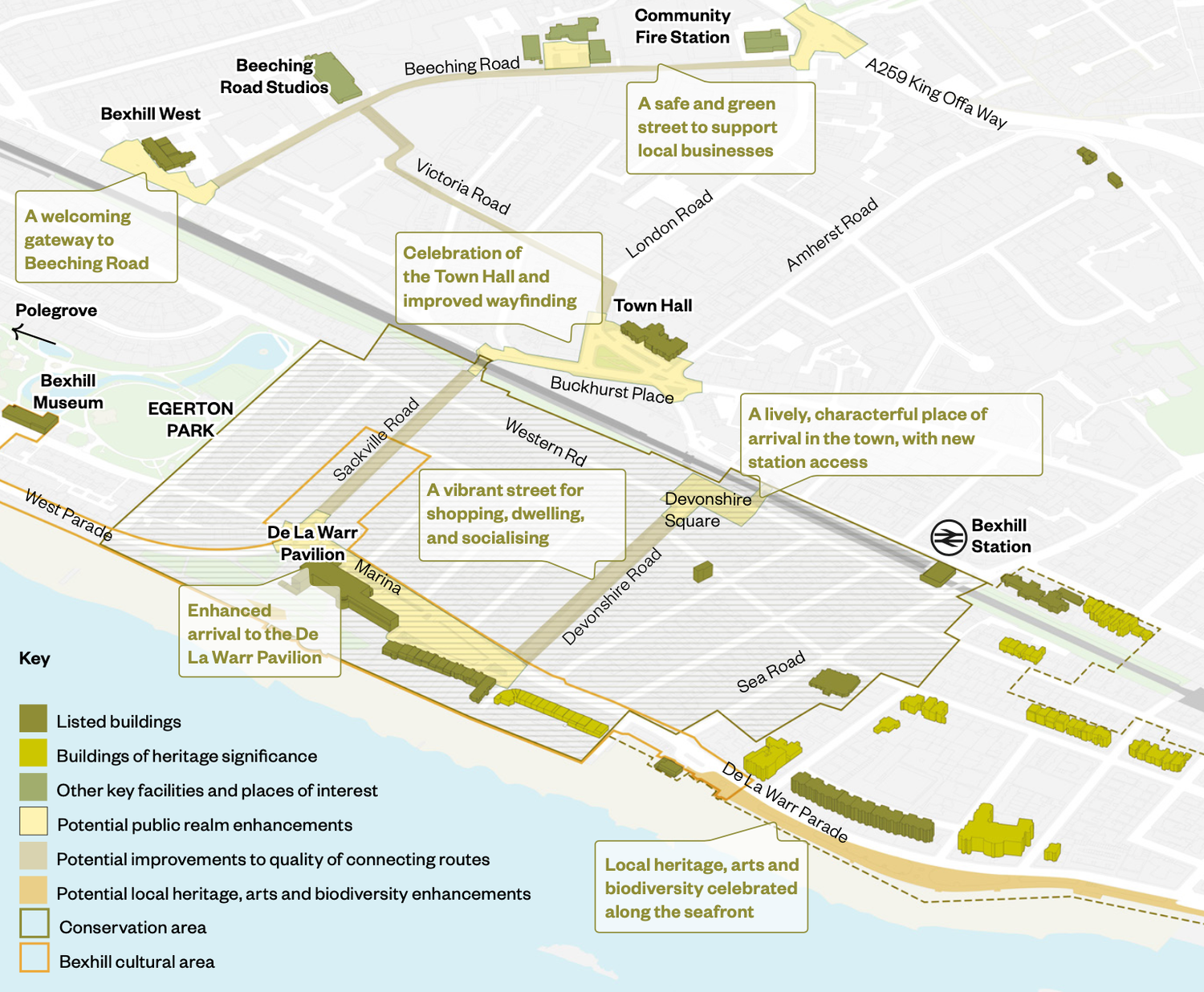
Improvement proposals for Bexhill town centre
In Clacton-on-Sea, we developed a ten-year regeneration plan and four-year investment framework on behalf of the Clacton Town Board, working with Tendring District Council, Essex County Council, PRD and Community Voluntary Services Tendring. Here too, £20 million of Pride in Place funding has been used to respond to long-standing structural challenges, particularly around health, employment and town centre vitality. The Clacton plan also demonstrates the value of coupling strategic investment with stronger local participation.
The plan was shaped by priorities identified by more than 600 residents and 70 local businesses and organised around three interconnected themes: Safe and Lively, Prosperous, and Healthy. A key outcome of the engagement process was the establishment of a 14-member Youth Board. Beyond enabling young people to contribute to the development of the regeneration plan, the Board will serve as the foundation of a permanent decision-making body for the first four years of investment, giving young people aged 14 to 17 a meaningful role in shaping key decisions. This reflects a wider understanding, echoed in current discussion about participatory budgeting and community power that pride in place is strongest when people can influence the change they see around them. Alongside this, the plan adopts a phased delivery approach that combines quick-win projects with longer-term strategic work on housing, workspace and town centre renewal. It also aligns with £11 million of existing investment in a new Civic Quarter and other regeneration programmes, helping ensure that public investment is coordinated and cumulative.
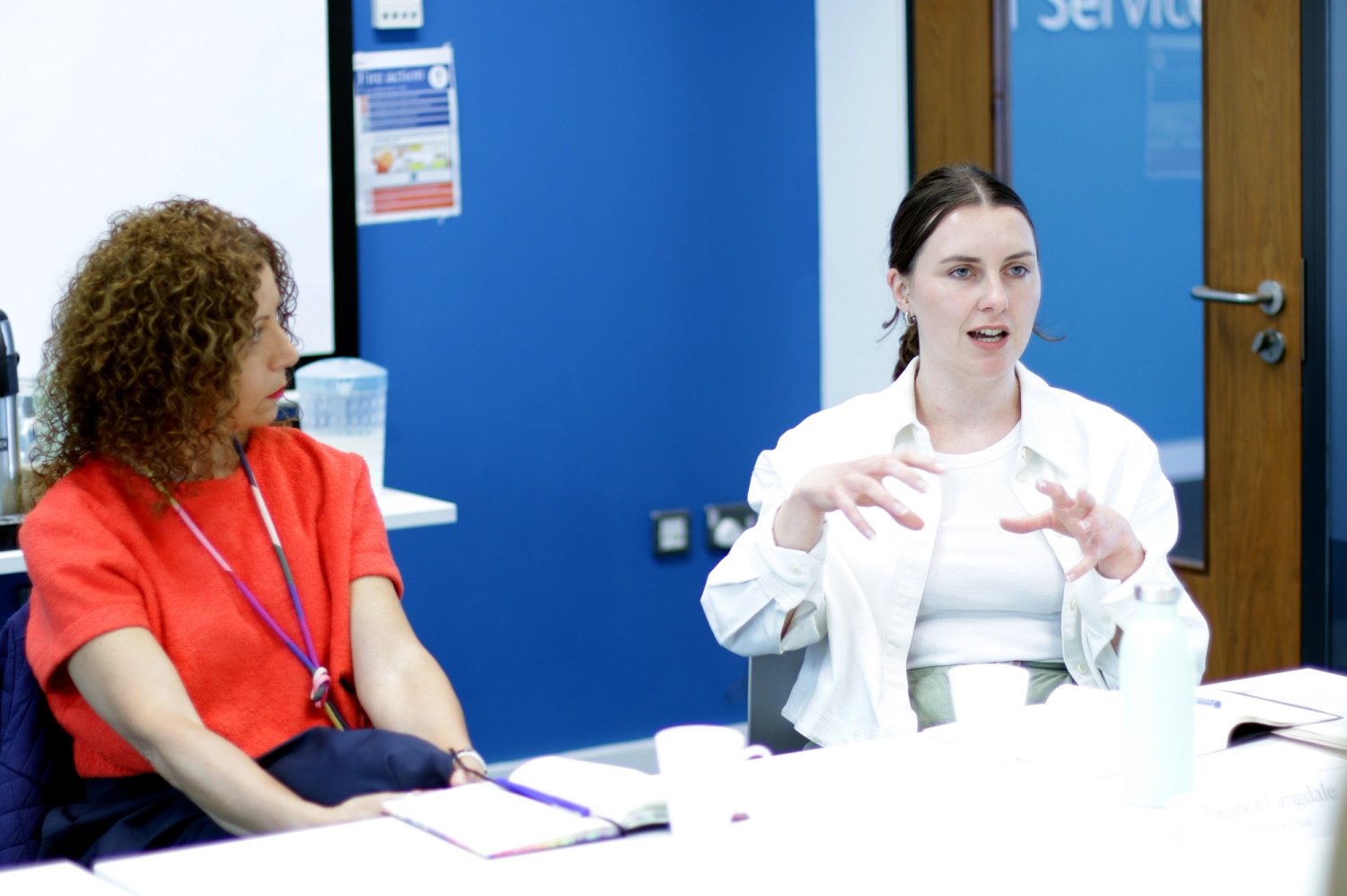
Roundtable in Southend-on-Sea on engagement and authentic participation
Taken together, Bexhill and Clacton suggest a more grounded way of thinking about pride in coastal places. Pride is not cosmetic. It is not achieved through one-off physical improvements alone. It comes from linking visible change with social infrastructure, stronger governance, better connections, support for local enterprise, care for heritage and real community influence over decisions.
If Pride in Place is to succeed as a national approach, it needs to back exactly this kind of work: long-term, locally rooted planning that couples capital investment with participation, partnerships and delivery capacity. In Bexhill and Clacton, the opportunity has been to shape plans that do not just improve coastal towns physically but help communities see themselves in their future again.
Bexhill image credit: Boyle&Perks