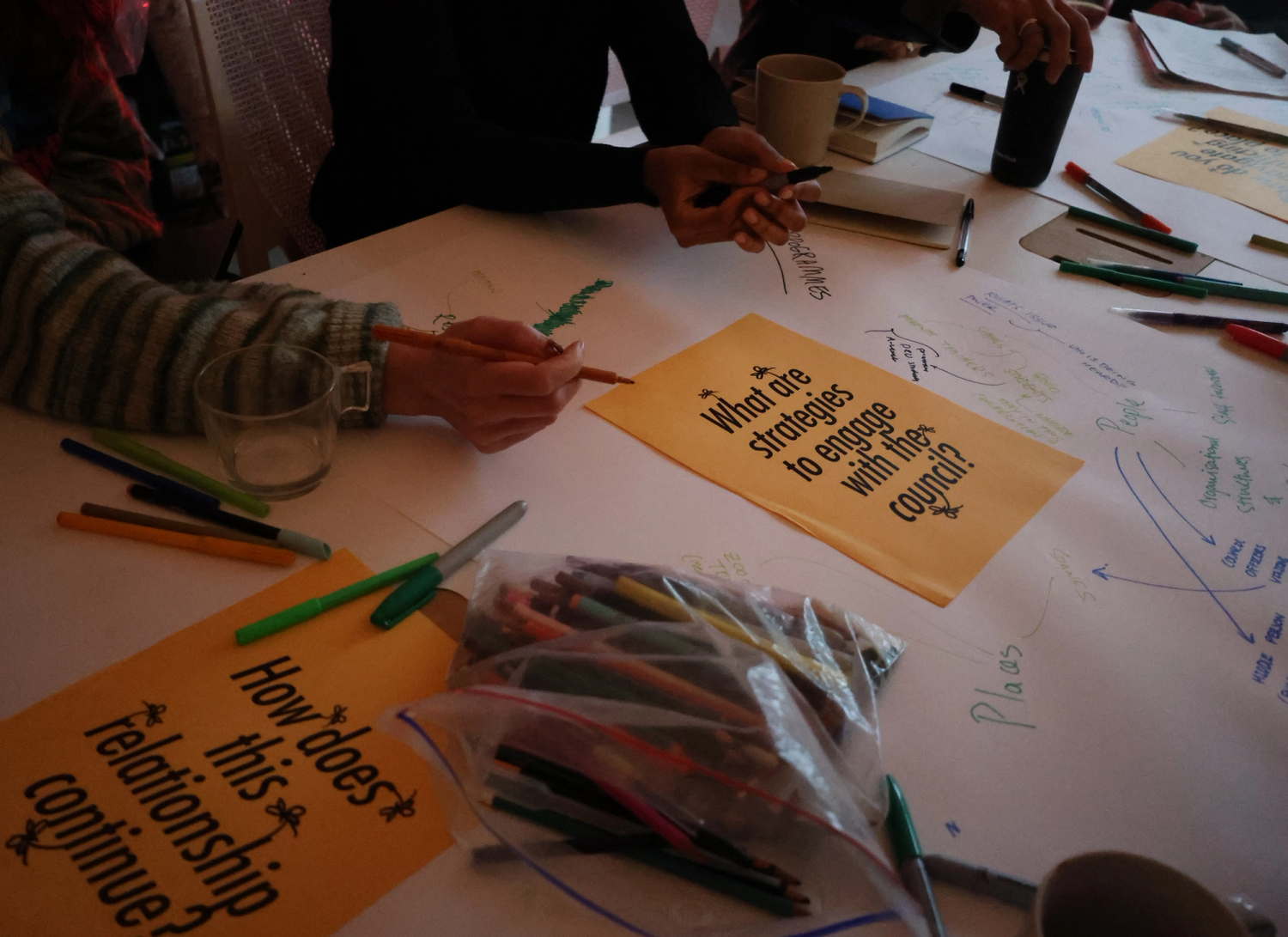
Impact Report 2025: Foregrounding rights
18 March 2026
In 2025, we focused on deepening our approach to public good. Throughout the year, our team has been actively involved in evolving our understanding of shared rights and responsibilities through both our project work and our internal practice initiatives.
In this fourth consecutive impact report since 2022, we have interrogated how ‘Rights to Place’ can be embedded into every research strategy, masterplan, public space and building we deliver. Collaborative reflection has ensured that our projects are shaped by a shared commitment to fairness and accountability.
Our 2025 Impact Report reflects on a year of significant change across the planning and development landscape in the UK. The government's announcement of New Towns, reforms to Green and Grey Belt areas, Pride in Place programme and accelerated devolution have reshaped the landscape for development. Alongside the target of 1.5 million new homes and a new London Plan on the horizon, the question is not simply about how we deliver growth, but for whom and how to do so justly.
In the report we explore how this thinking led us to establish the Rights to Place initiative, in partnership with Key Cities and how we as a practice are thinking more deeply about what it is we recognise and value. In each of our impact pillar case studies, we include a right that most appropriately frames these projects.
In approaching our work, we’ve began to ask ourselves a series of questions that centre rights at different points during a project. What are the rights enshrined in the client’s brief? What rights have been declared through engagement? And what rights have announced themselves through working processes on a project?
Against intense pressure to deliver, we’re proud that we still found space and time as a team for reflection. This year of focusing on Rights to Place has made us firmer in our commitment to equitable practice.
Our places: Expanding rights through delivery
In 2025, movement towards delivery re-gained momentum in the built environment sector, spurred by the government’s strategic reforms to policy. In response, our focus has remained on the "how" of getting things done. We have looked to ensure that the national push for growth is fundamentally anchored by both quality and equality in our projects. Consistency and trust are vital in this fast-moving environment. In 2025, 72% of our projects were with repeat clients. This continues a steady trend of long-term collaboration from previous years.
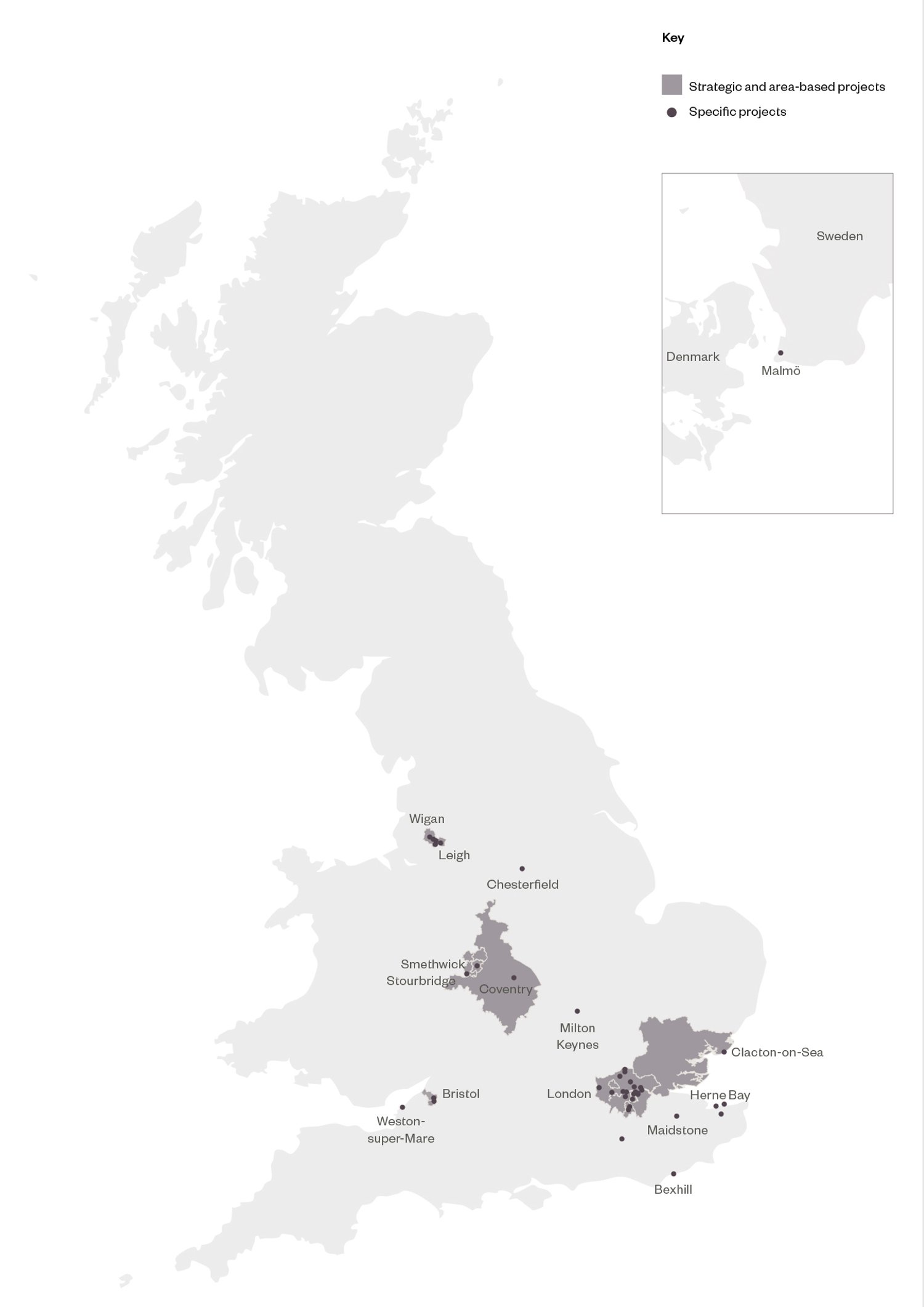
The places where we've worked in 2025
This Impact Report reflects on our work in 2025 across:
- 8 urban research studies
- 19 strategies and masterplans
- 13 public spaces and buildings
- 7 advocacy roles
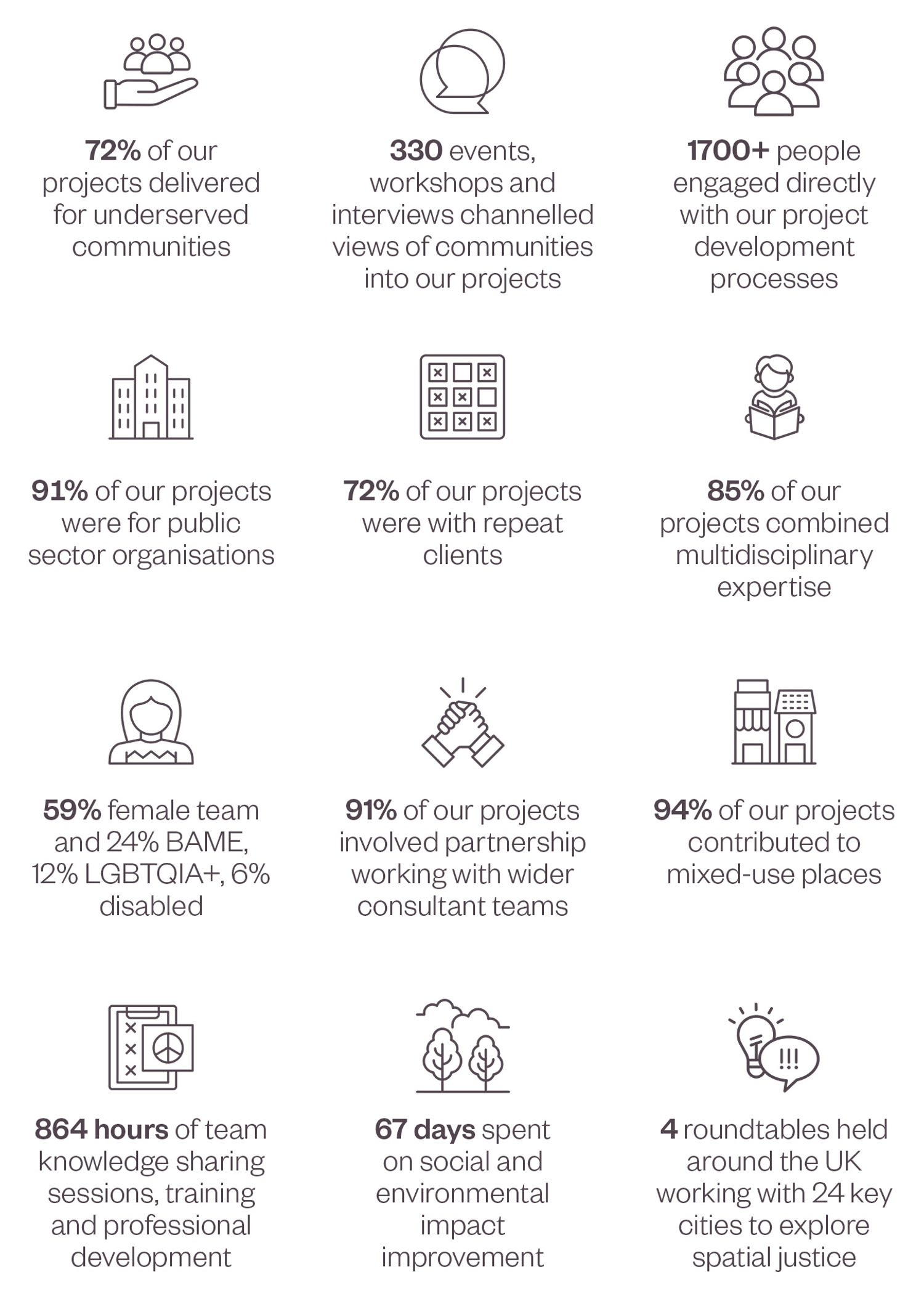
Our 2025 impact-at-a-glance
Our geographic focus this year highlights priorities such as the revival of high streets and the regeneration of coastal towns. Through the Pride in Place programme, we have developed frameworks for communities in Bexhill-on-Sea and Clacton to address local inequalities. In the West Midlands, our mapping of cultural infrastructure supports the opportunities created by regional devolution.
In Enfield, our work at Crews Hill and Chase Park is leading the way in defining a new edge-of-city urbanism for London. Meanwhile, in Malmö, Sweden, our work on the Trollhättan 6 city block has demonstrated that radical adaptive re-use is a leading solution for the global climate emergency.
Each of these projects have made clear the most urgent rights emerging in response to the place – and we have done our best to carefully consider and deliver justly.
The built environment reflects choices, values and priorities. Our work is a contribution to making those choices more just, more considered and more genuinely responsive to the people who live with their consequences. We are optimistic about initiatives like Pride in Place and their ability to reflect local needs. Likewise, the edge-of-city urbanism implicit in Green Belt reform presents an exciting opportunity for new types of places that rise to contemporary challenges. We look forward to exploring these further in 2026.
We are grateful to every client, collaborator, community member and colleague who shaped our work in 2025. The task ahead is demanding. We approach it with clear purpose, and with energy.
Read our Impact Report 2025: Foregrounding rights