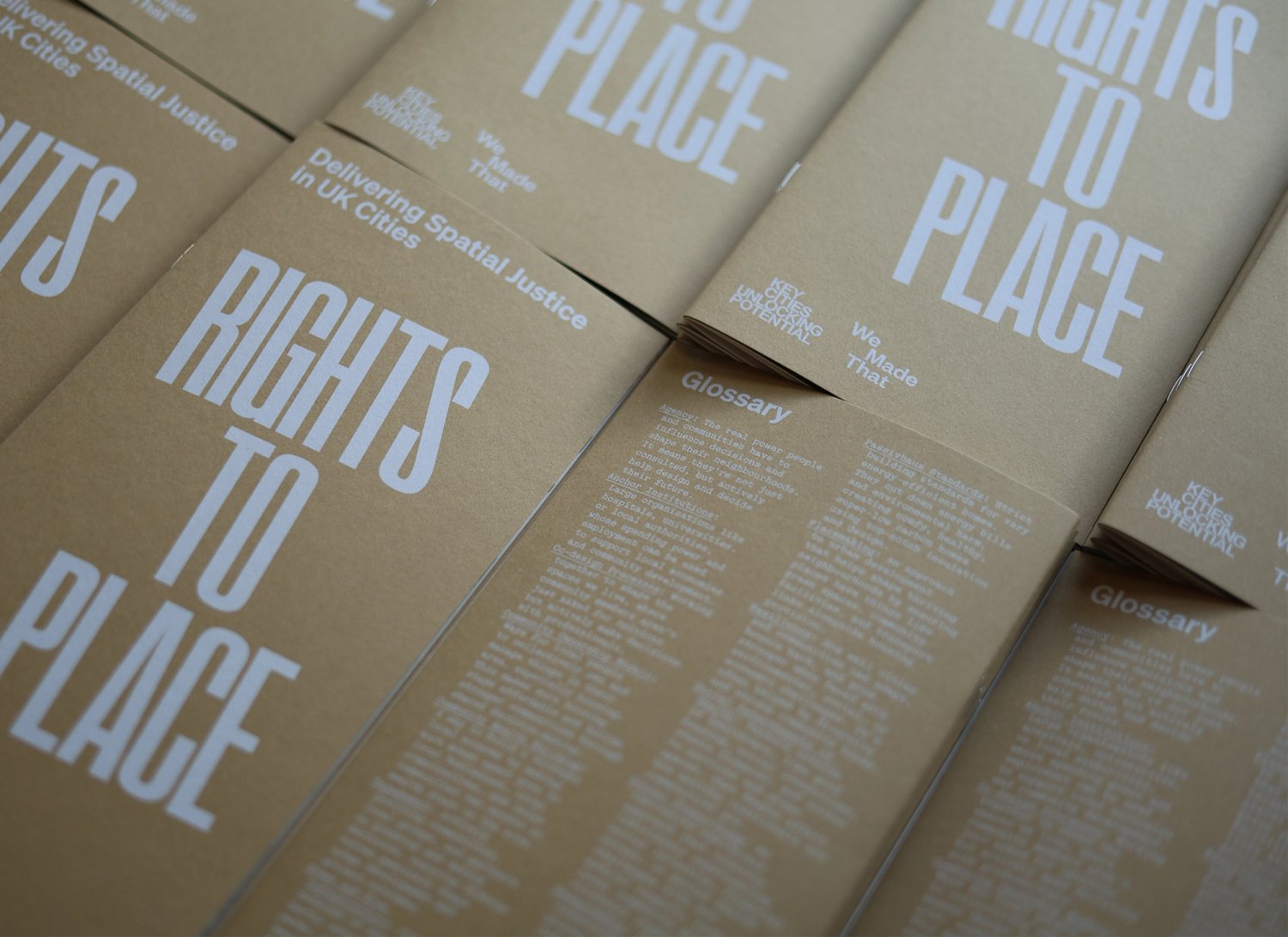
Rights to Place: Delivering Spatial Justice in UK Cities
03 December 2025
A new report explores how the built environment can advance fairness and inclusion across urban communities.
Throughout 2025, we partnered with Key Cities to examine spatial justice across the UK. Through surveys, interviews and roundtable discussions in cities from Salford to Southend, and Bristol to Coventry, we gathered perspectives from communities, practitioners and local authorities to understand how fairness and accessibility can underpin the design and governance of urban spaces.
The result is Rights to Place: Delivering Spatial Justice in UK Cities, a report that establishes five essential rights as a practical framework for advancing spatial justice. These rights emerge from the lived realities of urban communities and offer a common language for articulating what our cities could become when designed with and for people.
Five Rights to Place
The report identifies five interconnected rights that operate at multiple scales, from the physical environment of neighbourhoods to the participatory processes that give communities genuine agency:
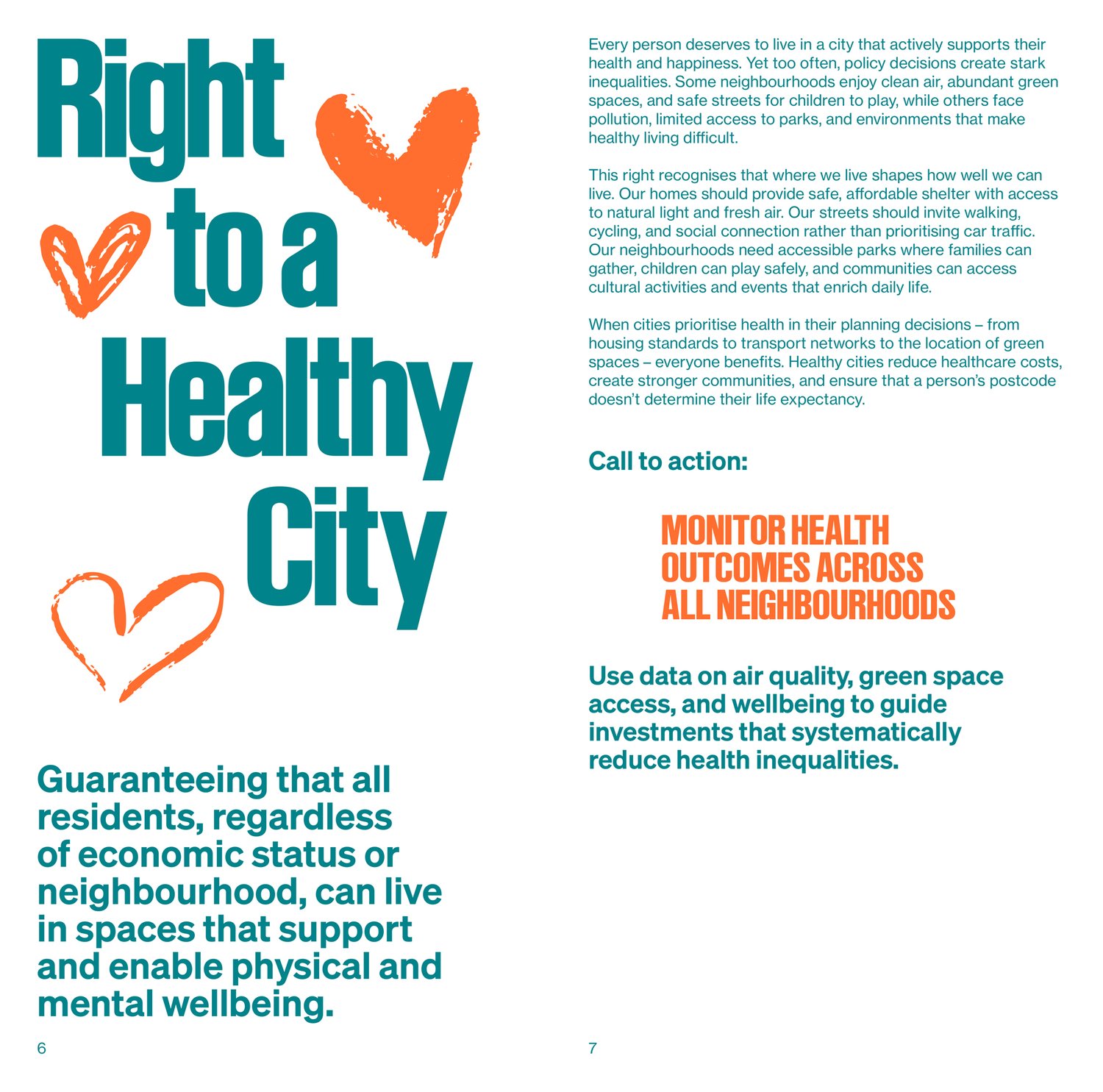
Right to a Healthy City
Guaranteeing that all residents, regardless of economic status or neighbourhood, can live in spaces that support and enable physical and mental wellbeing.
This right recognises that where we live shapes how well we can live, demanding that cities prioritise health in planning decisions from housing standards to transport networks to the location of green spaces.
Case studies include Bradford's Clean Air Zone, which reduced GP visits for respiratory conditions by 25% within its first year, and Hackney Central's Town Centre Strategy, which tracks health impacts through longitudinal monitoring of priority indicators.
Right to a Home
Asserting that housing is a fundamental human need, not a commodity.
This right demands that local authorities take control of housing provision through bold policy and spatial planning, creating mixed communities where different types of housing exist side by side with the green spaces, community facilities and local services that transform buildings into thriving neighbourhoods.
Examples include Norwich's Goldsmith Street, where social housing residents pay approximately 62% less in energy bills than the UK average, and Bristol Community Land Trust's resident-led development model delivering permanently affordable homes through community ownership.
Right to Care
Recognising that cities must be designed to facilitate collective care and community support, with sustained investment in the people and places that enable everyone to thrive with dignity.
This right addresses root causes rather than just responding to crises, demanding infrastructure that supports both professional carers and the unpaid care work that families and communities provide.
The report examines initiatives including Wolverhampton Railway Station's mental health Hub, Wellbeing Exeter's social prescribing programme connecting healthcare systems with community assets, and Walworth's area strategy demonstrating care for place through incremental neighbourhood-level interventions.
Right to Difference
Celebrating the diverse ways of inhabiting and understanding the city, while confronting the systemic inequalities that exclude many voices from shaping the built environment.
This right protects not just the ability to be different, but the power to make a difference, demanding that diverse communities receive equitable treatment and resources.
Case studies include PLACED Academy's work diversifying built environment professions, Hull City of Sanctuary's community-led integration creating welcoming environments for refugees and asylum seekers, and participatory women's safety audits revealing gendered experiences of public space across London.
Right to a Voice
Advocating that communities most affected by urban policies have genuine power and agency in determining their future.
This right insists that voice must connect to real agency, moving beyond token consultation towards co-design processes where communities become decision-makers, not just advisors.
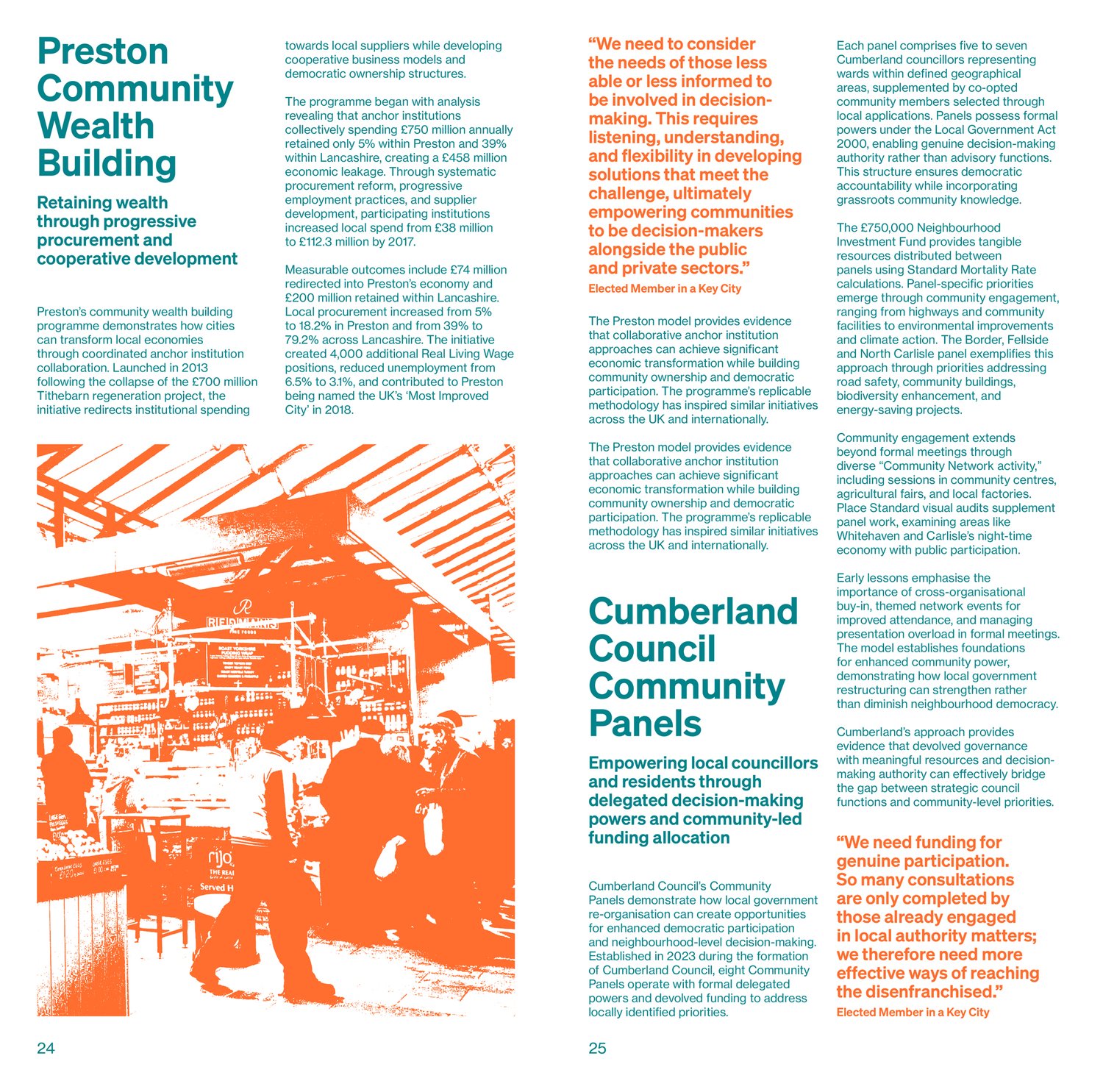
Examples include Preston's Community Wealth Building programme, which redirected £74 million into the local economy through progressive procurement, and Cumberland Council's Community Panels with delegated decision-making powers and devolved funding to address locally identified priorities.
Our Call for Collective Action
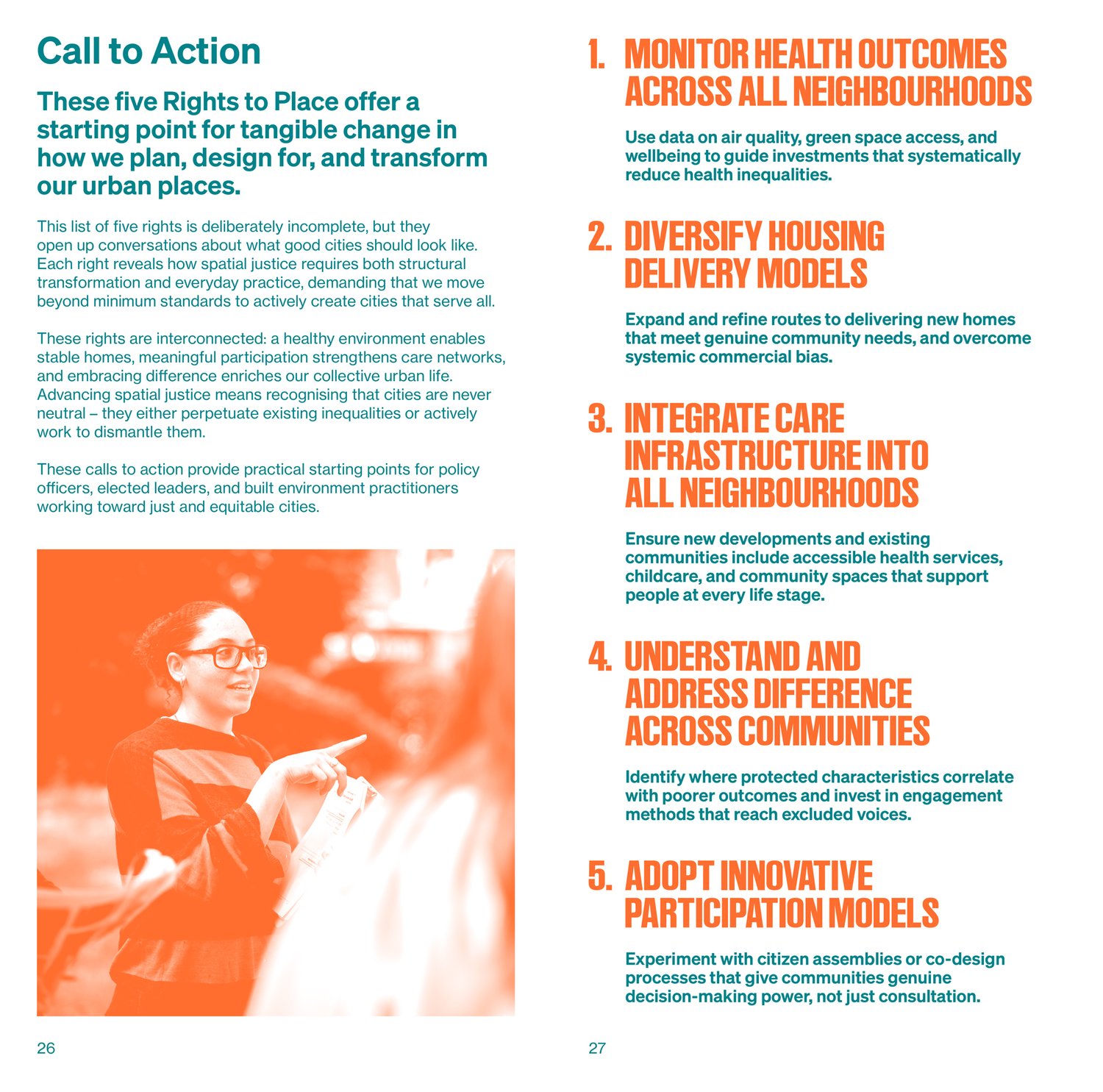
These five Rights to Place offer a starting point for tangible change in how we plan, design for, and transform our urban places.
This list of five rights is deliberately incomplete, but they open up conversations about what good cities should look like. Each right reveals how spatial justice requires both structural transformation and everyday practice, demanding that we move beyond minimum standards to actively create cities that serve all residents.
These rights are interconnected: a healthy environment enables stable homes, meaningful participation strengthens care networks, and embracing difference enriches our collective urban life. Advancing spatial justice means recognising that cities are never neutral. They either perpetuate existing inequalities or actively work to dismantle them.
The report concludes with five calls to action that provide practical starting points for policy officers, elected leaders and built environment practitioners working towards just and equitable cities:
- Monitor health outcomes across all neighbourhoods
- Diversify housing delivery models
- Integrate care infrastructure into all neighbourhoods
- Understand and address difference across communities
- Adopt innovative participation models
Download the full report to explore the detailed case studies, evidence and recommendations shaping this framework for spatial justice.
Rights to Place: Delivering Spatial Justice in UK Cities is published by We Made That and Key Cities, and designed by Stephen Barrett Studio. The research involved over participants across Key Cities member authorities throughout 2025, with support from ING.
Video: Dion Barrett